
Maenam, Bophut or Chaweng: choosing where to buy by how you will actually live
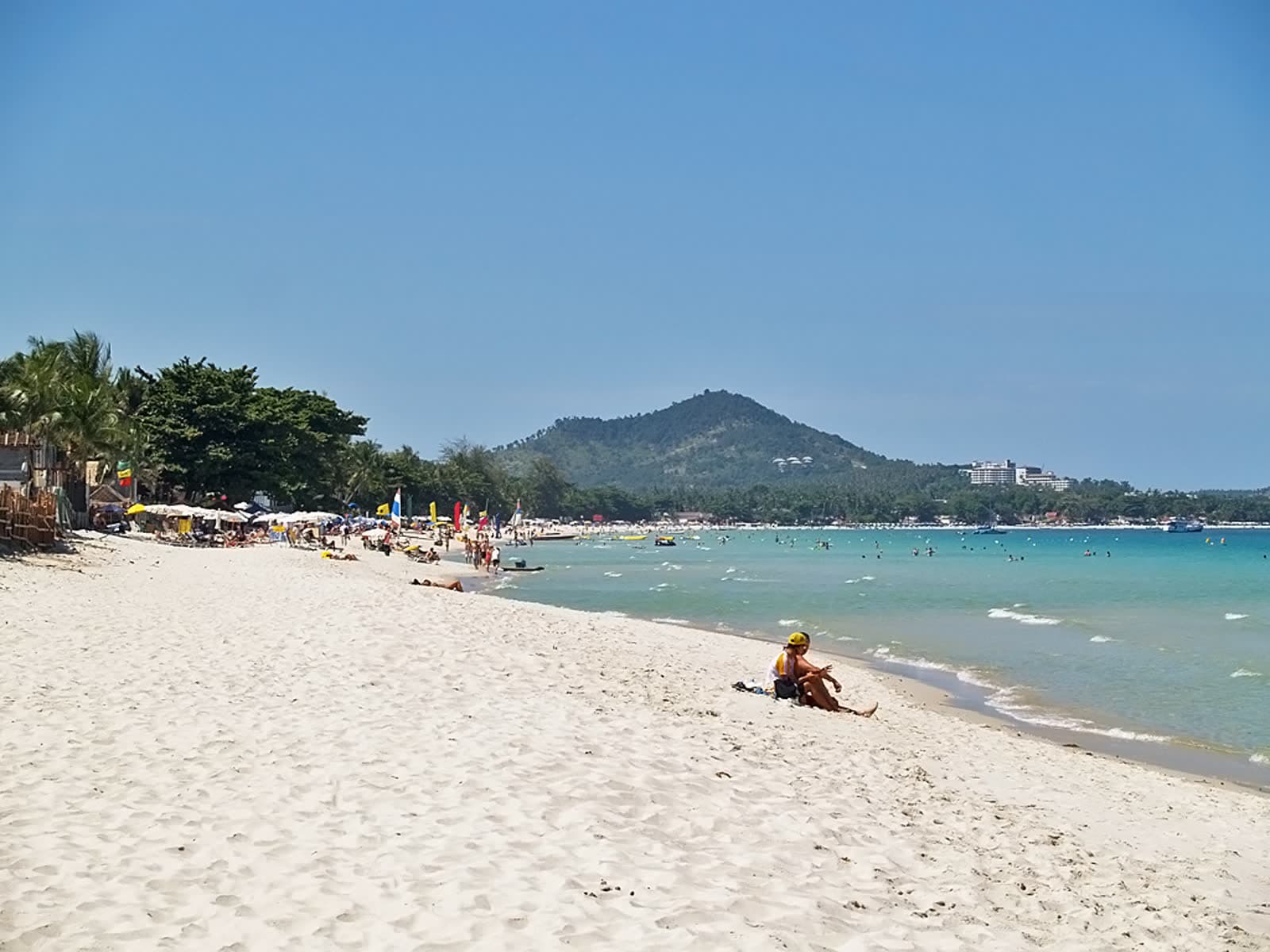
Image: Jacques Herremans — CC BY-SA 4.0, via Wikimedia Commons
Koh Samui is a ring road around a mountain. Almost everything that matters about an area — how long the school run takes, how loud the nights are, how quickly you reach the hospital — follows from where it sits on that ring and how built-up the stretch behind it is. The house you buy can be changed. The stretch of road cannot.
Maenam: quiet, good value, five to seven kilometres of beach
The north coast, facing Koh Phangan across calm swimmable water. Maenam has kept an unhurried, still recognisably Thai village character that the busier corners of the island traded away years ago, and land and villas here remain markedly better value than Chaweng or Choeng Mon.
It suits families, long-stay residents and anyone whose priority is a settled base rather than nightlife. The trade-off is honest: restaurant and bar choice is thinner than the east coast, and if you want to walk to a busy beach club at midnight this is the wrong end of the island.
Bophut and Bangrak: the compromise most people land on
East of Maenam along the same north coast, Bophut carries Fisherman's Village and a denser cluster of restaurants, while remaining within easy reach of the airport. It is the natural answer for buyers who want a quiet house but a short drive to somewhere with life in it, and it prices accordingly.
Chaweng and Chaweng Noi: rental demand, and the noise that comes with it
The island's commercial centre and its strongest short-term rental market. If your purchase is primarily a letting business, occupancy here is easier to achieve than anywhere else on Samui. If it is a home, understand what you are buying into: traffic, construction, and a beach strip that does not go quiet.
Our own completed villa sits above Chaweng Noi, on the hillside rather than the strip, which is the usual way people resolve this — proximity to the demand without sitting inside it.
Where we would not send you
The south and west — Taling Ngam, Lipa Noi, Laem Sor — are beautiful, considerably cheaper and genuinely remote. Sunsets rather than sunrises, very little traffic, and roads that make a hospital run in the rain a real consideration. For a retired couple with no school run and a taste for isolation they can be the best value on the island. For a family with two children in school on the north coast they are a mistake, and no amount of sea view fixes a ninety-minute daily round trip.
We publish written guides to all sixteen areas of Koh Samui, including the ones we have nothing to sell in. If Maenam is wrong for you, we would rather you learned it from us than after a deposit.
How to decide in one afternoon
- Drive your likely school run at 7.45am on a weekday, not at midday
- Drive to Bangkok Hospital Samui from the plot and time it honestly
- Stand on the land after dark and listen
- Check what is happening on the two plots either side — a sea view can be built out
- Ask what the road does in heavy rain, and look at the drainage
Hillside or flat land, and what it costs you either way
Most of the sea views on Samui are on hillsides, and hillside building is materially more expensive than flat-land building. Retaining structures, access roads, drainage and getting materials up a gradient all add cost, and they add it before a single wall of the house goes up. That is why two plots of similar size in similar areas can support villas at very different prices.
The compensation is that hillside views are the one thing on the island that genuinely cannot be replicated at scale, because the buildable, accessible, legally developable hillside is finite and the rules governing it have tightened rather than loosened. Flat land near a beach is more comfortable to build on and easier to resell to a wider audience, but there is a great deal more of it.
The practical questions on any sloping plot are the same three every time: how does the access road behave in heavy rain, where does water go when it comes off the hill above you, and what is the retaining structure actually engineered to. These are not aesthetic considerations. They are the difference between a house that is fine in twenty years and one that is not.
The view you are buying, and whether you get to keep it
A sea view is only as durable as the plots between you and the sea. Before committing, establish what is directly downhill: who owns it, what its zoning permits, and whether anything is already permitted or under construction. Buyers routinely pay a premium for an outlook that is legally buildable-out, and discover the fact two years later when the foundations go in below them.
Elevation helps, as does buying where the land below is already developed to its likely maximum — a built-out slope is a known quantity in a way that an empty one is not.
How the areas differ on infrastructure
Water supply, mains electricity capacity and internet quality are not uniform across the island, and they matter more than the brochure suggests. Some hillside developments run on shared private water systems or deep wells rather than mains supply. Power capacity on some remote stretches limits what you can run. Fibre coverage is good along the ring road and around the main centres, and patchier inland and in the south.
For anyone intending to work from the house, this is not a detail. Ask specifically what the internet provision is on the plot, from which provider, and at what speed — not what is available somewhere in the district.
- What is the best area to buy property in Koh Samui?
- For families, the north and north-east — Maenam, Bophut, Bangrak — for school, airport and hospital access. For rental yield, Chaweng. For privacy and value, the south and west, if you can live with the distances.
- Is Maenam a good place to buy in Koh Samui?
- It offers better value than the east coast, calm swimmable water and a quieter, more residential character, with a shorter restaurant scene as the trade-off.
- Which part of Koh Samui is best for rental income?
- Chaweng and its surrounds see the strongest short-term demand, though also the most competing supply. Note that letting under 30 days requires a hotel licence or local registration.
- How long does it take to drive around Koh Samui?
- The ring road is roughly 50 kilometres. Circumnavigating takes well over an hour without stops, and considerably longer through Chaweng at peak times.
- Where do most expat families live on Koh Samui?
- Predominantly the north and north-east coasts, because that is where the international schools, the airport and the main hospital are concentrated.
Sources
- Best Thailand private hospitals for expats and digital nomads in 2026 — Pacific Prime
- List of every international school in Koh Samui — International Schools Database